

Please follow us on Gab, Minds, Telegram, Rumble, Truth Social, Gettr, X, Youtube, Instagram
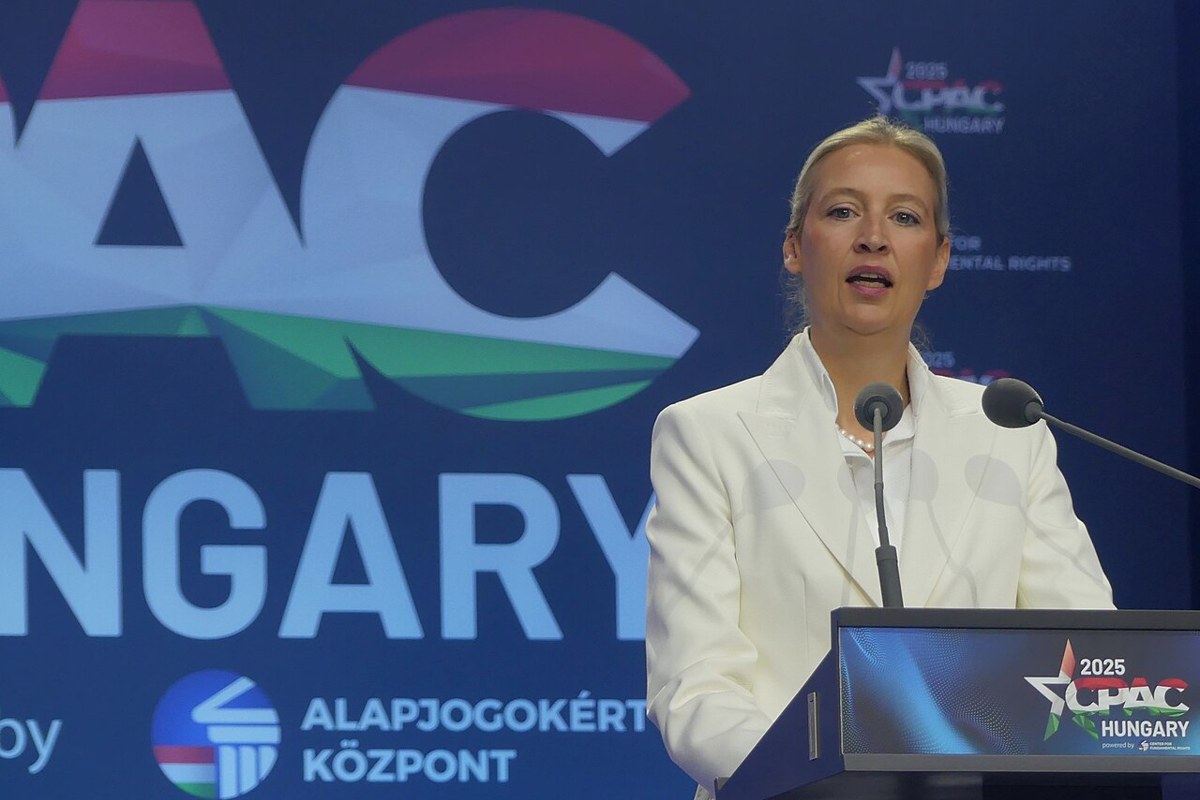
Germany’s Alternative for Germany party wants to re-build the European Union from inside the EU instead of leaving it. The program of the party’s co-leader Alice Weidel will be presented at the European Parliament in Strasbourg on Wednesday under the title "Our new deal for Europe," according to Politico.
The AfD wants to start to rebuild the EU from within as a looser "federation of sovereign nations" focused mainly on the single market, border protection and security. At first the party does not want to leave the EU or the euro zone. In the first place it wants to negotiate the existing EU treaties in order to curb the powers of the EU, to cut its institutions and to slash its budget.
The plan wants to dismantle several key structures that form the basis of the current European system of governance. First, it seeks to abolish direct elections to the European Parliament, replacing them with delegates appointed by the national parliaments. Second, the role of the European Commission shall be reduced to purely administrative tasks. Third, in place of the Court of Justice of the European Union, an arbitration tribunal should be established in its place.
In order to implement the envisaged reductions the EU budget will be "slashed" and even "capped". Also the EU staff will no longer be allowed to increase and EU agencies will be abolished. The AfD would use Germany’s EU veto to scrap revenue from VAT and the plastics tax. If Brussels refuses the path of reform, the plan says, the veto will be used to block future EU financing legislation and drastically reduce Germany’s contributions.
A number of other points of contention with current EU policy were mentioned, including Germany’s desire for increased voting weight at the European Central Bank (as the largest eurozone economy) and for the EU to reject the digital euro. The document also stated that the party would seek opt-outs from current EU migration policy as well as from current taxation policy, social policy, defense policy and policy regarding joint borrowing. They would also seek opt-outs from the EU’s green, industrial, agricultural and financial policies unless those policies are substantially reformed.
In case these things fail, Germany’s EU membership will be put to a German referendum. That marks a softening from the party’s earlier calls for a German exit.
It’s looking to the 2029 European and German federal elections, which it sees as the moment to start. "In 2029, something we have scarcely dared to hope for may become reality: a patriotic, right-wing majority in the European Parliament is coming within reach," the plan says.
However, it is not the AfD alone who is challenging the EU in its current form. French nationalist leader Marine Le Pen was in Brussels last week and outlined her plan for the EU should she become French president. Under her proposals, France’s contribution to the EU budget would be halved and the European Commission would be transformed into a "secretariat" serving the member states. "The European Commission wants to turn itself into a state; we do not. And so we will stand in its way," Le Pen said, according to Politico.
The AfD is arriving in Strasbourg with momentum, Politico noted. The party has recently won state elections in Saxony-Anhalt and Mecklenburg-Western Pomerania.
This is news for Americans who have grown up watching the development of Brussels as a separate entity above national governments. Instead of only asking whether or not to leave, the opposition in two of the EU’s biggest economies is now mapping out ways in which the EU could be reformed into a federation of sovereign nations, and outlining a time frame in which these reforms could be put into place.