





Please follow us on Gab, Minds, Telegram, Rumble, Truth Social, Gettr, X, Youtube, Instagram
Posted Zero Hedge
France moved to suspend classes at between 400 and 500 high schools on October 5, with Education Minister Édouard Geffray describing the closures as a precautionary measure after weeks of student protests escalated into widespread violence. Out of roughly 3,700 high schools nationwide, the ministry said lessons would be “totally or partly suspended” at hundreds of sites where security conditions could not be met ahead of further planned demonstrations.
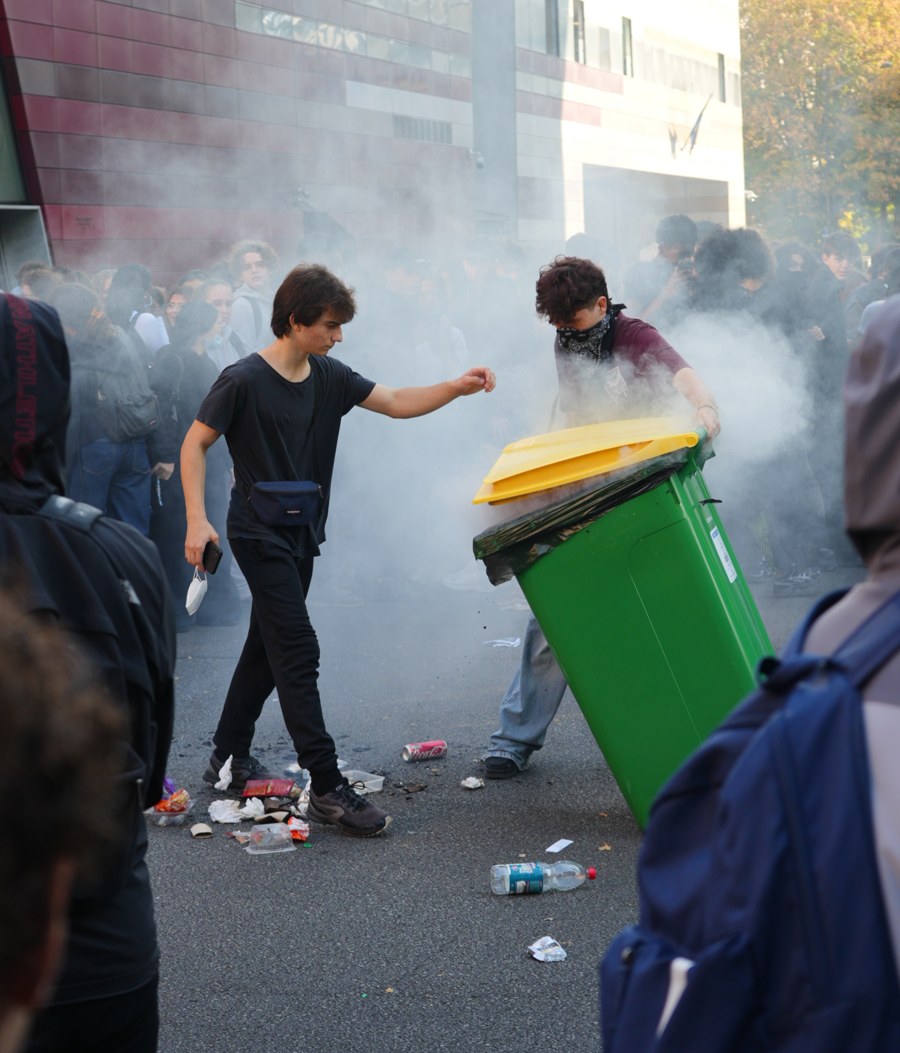
The unrest began in mid-to-late September in the Paris region, initially over teacher shortages, overcrowded classrooms, dilapidated buildings, and a lack of resources, before spreading nationwide to cities including Marseille, Lyon, Lille, and Nantes. What started as school blockades quickly turned destructive. At least two dozen schools were reported burned or ransacked, with barricades, bins, and school entrances set alight and staff and police attacked.
The human toll has been significant. According to official figures, at least 78 education staff and around 170 students were injured, along with hundreds of police and gendarmes. More than 5,000 people have been detained since late September — roughly 85 percent of them minors, by the authorities’ own count.
Government officials have pointed the finger at the far left. Geffray and the prime minister’s office accused hard-left activists of infiltrating the student movement, “hijacking” it, and driving the most extreme violence. Intelligence reports cited by French media linked the escalation to manipulation by radical groups, including elements tied to La France Insoumise (France Unbowed), the party led by Jean-Luc Mélenchon, as well as what officials described as revolutionary communist agitators.
La France Insoumise has denied directing any violence, with the party and its allies framing the protests as a legitimate response to systemic failures in French education and criticizing the police response as excessive. The government rejected that characterization, emphasizing “urban violence” and floating measures such as holding parents liable for damages.
The clashes come against a backdrop of French political and budget tensions and upcoming electoral battles, with authorities now prioritizing a return to order even as the protest movement vows to maintain pressure. As Zero Hedge and French outlets have reported, the standoff has become a flashpoint over who controls the streets — and who is held accountable when a student movement turns to arson.