

Please follow us on Gab, Minds, Telegram, Rumble, Truth Social, Gettr, X, Youtube, Instagram
Originally published at Tsarizm.
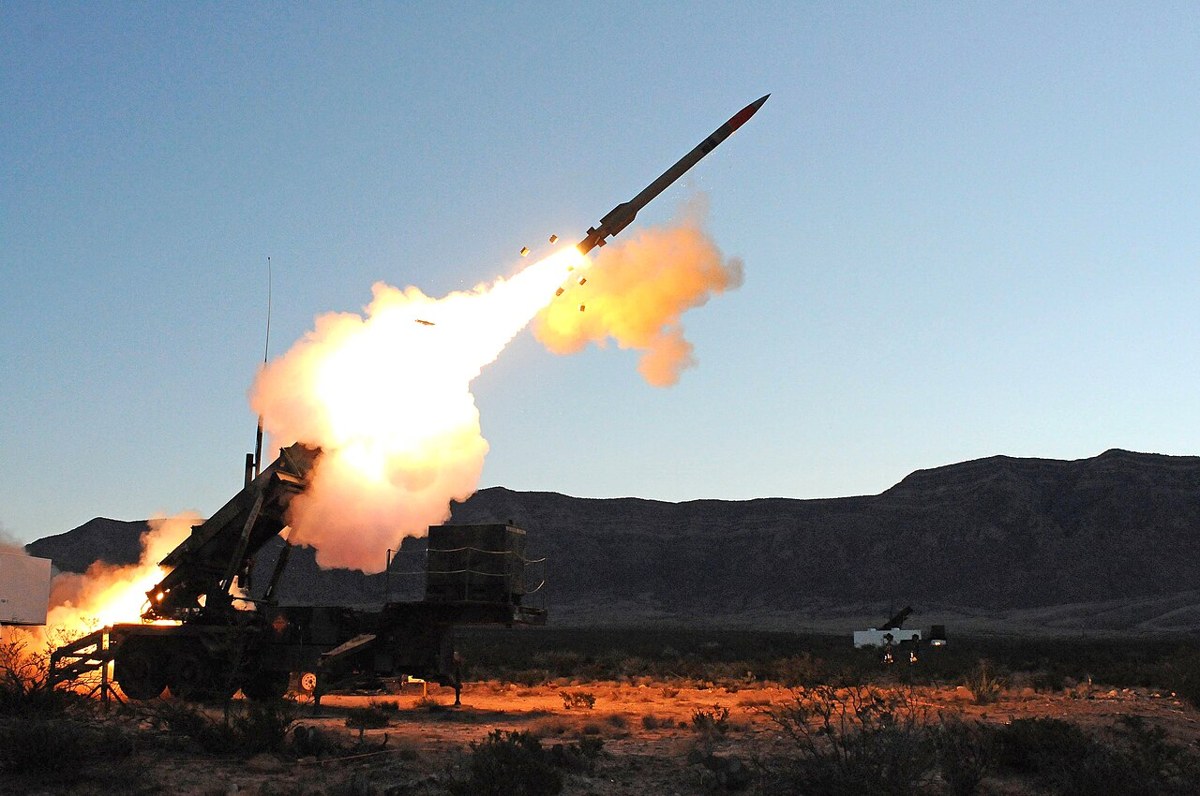
Ukraine has asked Lockheed Martin to let it manufacture America’s most advanced air defense interceptor, the Patriot missile, on Ukrainian soil. At a meeting in Kyiv on October 19, Volodymyr Zelensky described to Orlando Sanchez Jr., President of Lockheed Martin Aeronautics, a request to ‘jointly produce’ the interceptor under ‘production licenses’, and said Ukraine hopes to buy some ballistic-missile interceptors outright. He also requested that F-16s be repaired in Ukraine. Sanchez said Lockheed is ready to deepen cooperation.
As of now, the meeting hasn’t produced any figures (quantities and/or dollar values) or timeframes, which is the only reason this story is not bigger. Transferring the missile technology of America’s most advanced air defenses to a government that is currently struggling to contain its own corruption scandals is the ask on the table.
The corruption unearthed by Ukraine’s anti-corruption bureau NABU in its Operation Midas investigation is a matter of public record. NABU says the outfit ran as a massive criminal organization, taking kickbacks of 10% to 15% from contractors to the state nuclear operator Energoatom, and laundering roughly $100 million. The alleged organizer of the gang was Timur Mindich, a long-time business associate of President Zelensky’s from their days at Kvartal 95 studio. Andriy Yermak, then head of the President’s Office, who stepped down on the day investigators searched his apartment in November 2025, was charged with large-scale money laundering in May 2026. He has been denying any wrongdoing on his part. The same case also led to charges against a former energy minister.
This would be a massive transfer of highly protected technology to a government whose inner circle stands accused of skimming wartime funds. American taxpayers have been underwriting this war. Nobody serious is asking whether corruption reaches Kyiv’s top offices. The question is whether Washington wants to hand this same system the blueprints to some of the most guarded and protected technology that Raytheon and Lockheed Martin have to offer.
Ukraine has also reopened its arms exports. Reuters reported in February that Kyiv was opening up wartime technology sales to raise cash, and Zelensky has framed the policy as “controlled” sales of surplus production. Recent defense cooperation agreements have been signed by Ukrainian officials with countries of the Gulf. A country that is shopping its military industry abroad for cash while still at war is unlikely to keep licensed Patriot production in a locked safe once it has the technology. The next buyer would be whoever pays most.
It is after all the Pentagon’s own Inspector General who highlighted serious problems with the US DoD’s attempt to track more than $1 billion in high-risk defense equipment, including Javelin and Stinger missiles, sent to Ukraine over the past years. If Washington struggled to track shoulder-fired weapons, it should not be exporting the manufacturing know-how for Patriot interceptors.
The Trump administration appears to understand the risk of transferring this technology to Ukraine. At the NATO summit in Ankara in July, Trump said that he would allow Ukraine to start producing Patriot interceptors. However, within weeks the administration was trying to walk back that announcement. U.S. NATO Ambassador Matthew Whitaker said in an August 3 Fox News interview that only American manufacturers are allowed to make the Patriot in the United States and that no long-term production agreement would be concluded before winter. Defense News reported in August that Lockheed Martin and Raytheon had begun hedging, and a Republican congressional official suspected the real worry was a leaner Ukrainian industry undercutting their production lines.
That instinct is correct. American air defense technology, which has been paid for and developed by American workers, is a precious commodity. This technology should be built in American factories by American workers and then sold to other countries under the control of the US government. American interceptor stockpiles are already stretched. Ukraine should be allowed to purchase finished interceptors through normal approved channels and not be granted production licenses.
But it is still only a request. We will know that the U.S. has changed direction when it signs a production license, a joint-production agreement, or a contract to buy specific quantities of interceptors for specific dollars. We will have to ask who is on the other side of that agreement, and where that technology will end up.