




Please follow us on Gab, Minds, Telegram, Rumble, Truth Social, Gettr, X, Youtube, Instagram
Britain is building a case for another confrontation with Russia – this time a large fleet of fishing boats.
The Telegraph reported that Russian trawlers are mapping the seabed where many of the UK’s undersea cables travel. The paper’s analysis of four and a half years’ of satellite tracking data from Global Fishing Watch revealed that more than 500 incidents had been logged in which Russian vessels operated above, or followed the routes of, cables connecting the UK to Europe and the US. Of these, 17 ships had been tracked hovering in the same area for long periods at low speed in regions where cables ran through charted routes.
The examples given by the Telegraph are specific and detailed. For example, Ship A turned up near nine separate cables. North of Scotland, Russian fishing boats logged 337 hours over the Atlantic Crossing 1 cable, 322 of them in April 2023. Ship B crossed the Hibernia Express cable several times and sat for nearly an hour at under two knots. Ship C followed a decommissioned cable for 10 miles, reversed course, then slowed over Google's Grace Hopper cable and the Amitie cable linking the UK to France and Spain.
Again, there is no proof of interference or damage to any cable. As ClashReport noted in its summary of the Telegraph findings, tracking data alone does not establish what equipment the boats carried. What's left is anonymous sourcing and naval speculation. A NATO source told the Telegraph that some of the ships identified in the article “have never seen a single fish on their deck”. A senior naval officer who watched footage of one of the ships identified told the Telegraph that it “could be easily used for other activities to store an uncrewed surface vehicle or remotely operated vehicles (ROVs)”.
The government is presenting it as an urgent threat, to be answered by replacing the 140-year-old Submarine Telegraph Act. The new security measures proposed by the White Paper of the Department for Science, Innovation and Technology include up to 14 years in prison and unlimited fines for anyone who intentionally damages cables or pipelines. There will be new security duties placed upon telecoms companies, and the government will be granted new powers to instruct such companies on a national security basis. A 12 week consultation will be held upon the proposals of the new legislation.
The same press release, interestingly, notes that the UK’s undersea cable network is highly resilient. The release says that when cable faults occur, they are due to accidents involving anchors or trawler nets being dragged across the cables, environmental hazards or technical failures.
Other facts, however, have not received the same amount of coverage. For starters, there is currently no law which would prevent Russian fishing vessels from surveying cables in the area. The two Russian fishing companies sanctioned by the EU over allegations of espionage - Norebo and Murman Seafood - both deny any wrongdoing, and Norebo is challenging its listing and claims that the EU has no evidence to back up the allegations. Neither of the companies has been sanctioned by Britain.
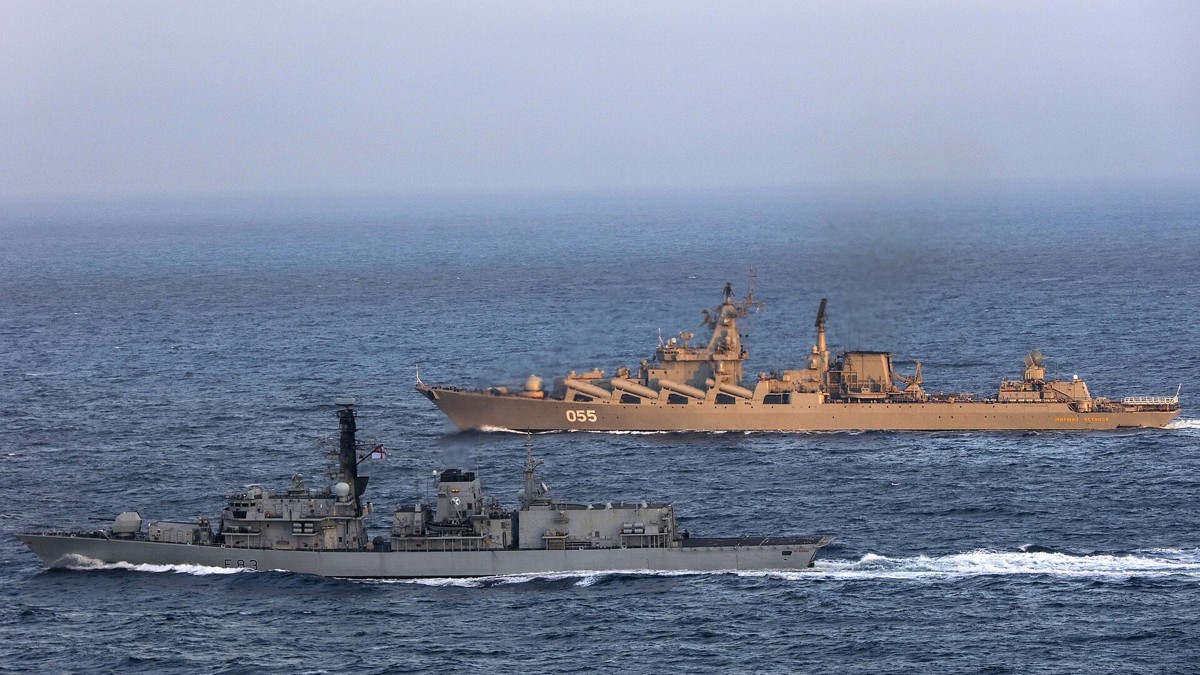
Sir Gwyn Jenkins has warned that on the first day of a conflict Russia would likely cut Britain's cables, and that Moscow is “probing, testing and mapping” the seabed. The Chair of the Defence Committee, Tanmanjeet Singh Dhesi MP, has said that the Royal Navy currently has only 11 frigates and destroyers, but needs 19 just to keep pace. The Ministry of Defence pointed to 1.5 billion pounds for its Atlantic Bastion program and another 330 million pounds to strengthen protection of critical undersea infrastructure.
It is also worth noting that US envoy Steve Witkoff has just returned from Russia, and there are hopes of a three-way meeting between Washington, Moscow and Kyiv no later than early November. Russia is also sending its first diesel cargo to the United States. While Washington is trying to negotiate with Russia, the British media is full of stories of threats from Russia, and calls for more ships, more money and harsher laws.