




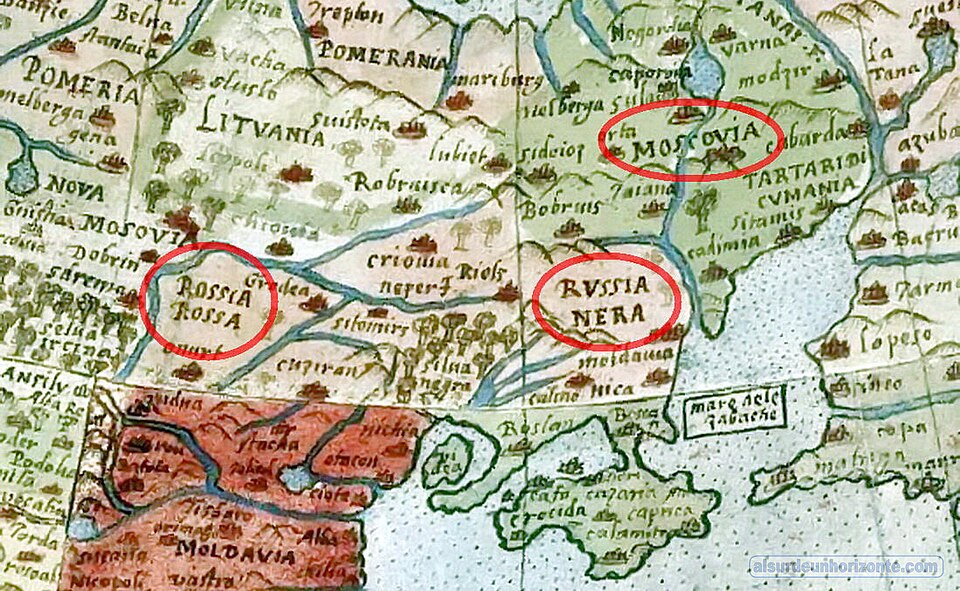
Image by Urbano Monti
Please Follow us on Truth Social, X , Youtube , Minds, Telegram, Rumble, GETTR, Gab, Instagram
Russia has, judging by the latest signals from the Valdai Forum and from official Moscow, finally and unequivocally buried the illusion of a swift peace with Europe. The optimism that occasionally flickered in previous months — whether due to hints of possible negotiations or expectations that the American administration would pressure Kyiv — has given way to a cold, realistic, and almost fatalistic assessment: the war continues, and its outcome must be military. Peace is no longer a goal achieved through compromise, but a result forced on the battlefield.
There is, however, a clear and strategically important difference in the attitude toward Washington. The Kremlin openly leaves room for cooperation with the United States and President Trump. There it sees the possibility of a pragmatic agreement based on shared interests — whether concerning the control of escalation, energy issues, or a broader geopolitical realignment. The European Union, by contrast, is effectively written off as a partner with whom there is no longer any serious dialogue or any trust whatsoever. In the Russian view, Brussels is perceived as an actor that not only does not want peace but is actively working toward the strategic weakening of Russia.
Dmitry Trenin, the man who for two decades headed the Carnegie Endowment in Moscow and was one of the most vocal and influential advocates of Russia’s “European” path, today summarizes this bitter lesson without any embellishment. For thirty years Russia persistently tried to join the Western “club” — to be accepted as an equal partner, to build relations on the principle of mutual respect and shared values. That attempt, in his assessment, was futile and costly. Europe, as Putin himself clearly stated at the Valdai Forum, has not abandoned the idea of strategically defeating Russia, “dismantling the empire,” and permanently weakening the Russian state as a geopolitical factor. Therefore, the turn toward the East and the Global South is no longer a free choice of the elite, but a necessity imposed by geopolitical reality. The Valdai Forum, once a platform for dialogue with Western intellectuals and politicians, has become a mirror of this profound transformation of Russian foreign policy and of the way Moscow now sees the world.
In this new context, military objectives are acquiring ever clearer, more concrete, and longer-term outlines. The seizure of Odesa is no longer merely an operational wish or a symbolic goal, but a strategic necessity. Russia is, according to this logic, compelled to turn Ukraine into a landlocked state — thereby permanently limiting its economic, commercial, and military capabilities and preventing its renewed strengthening as a potential bridgehead against Russia. At the same time, an offensive in the direction of Kharkiv and Zaporizhzhia is announced as a logical and expected next step in the coming year. The aim is not only territorial gain, but the creation of a wide and deep buffer zone that would make any “freezing” of the conflict on lines that would leave Kyiv room for future revanchism, regrouping, and rearmament with Western help impossible.
Zelensky is, of course, a huge problem for any negotiation process. His position, rhetoric, and dependence on Western support make him an unacceptable interlocutor for Moscow. But the question of an alternative is no less problematic. All previous Kyiv politicians, without exception, in the Russian assessment, have lied to Moscow — whether regarding the Minsk agreements, neutrality, or security guarantees. Trust has been completely exhausted. That is why the Kremlin is no longer looking for a “reliable” negotiator in Kyiv. It is seeking a decisive military result that will itself dictate the terms of a lasting peace, regardless of who is sitting in Bankova Street at that moment.
In addition to all this, concern is growing over Kaliningrad and Japan’s behavior. The Kaliningrad exclave, surrounded by NATO territory and potentially cut off in the event of a wider conflict, is becoming a symbol of Russian vulnerability and one of the most sensitive points of Russia’s security architecture. At the same time, suspicions that Japan holds or could hold nuclear missiles on its territory add a new and dangerous dimension of tension in the Far East. Russia no longer views the Ukrainian theater as an isolated conflict. It sees a wider arc of pressure stretching from the Baltic, across the Black Sea, all the way to the Pacific — and is preparing for that reality.
In short: Europe has been written off as a partner and as a prospect. Ukraine is viewed primarily through the prism of a military solution. With Washington and Trump, however, Russia sees real room for cooperation and a possible pragmatic agreement. The illusion of a “return to Europe” is dead. A pragmatic relationship with America remains an open and serious option. Odesa, Kharkiv, and Zaporizhzhia are becoming symbols of the decision to end the war on the battlefield — while simultaneously building a new, more realistic, and less ideological relationship with Washington.