




Please Follow us on Truth Social, X , Youtube , Minds, Telegram, Rumble, GETTR, Gab, Instagram
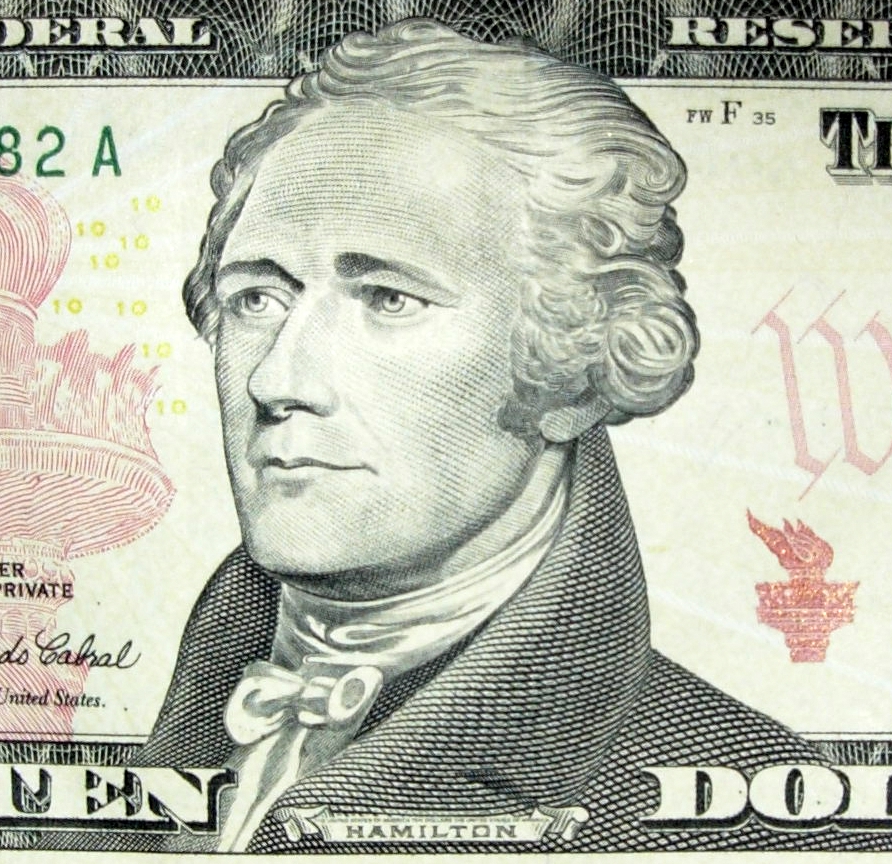
There are a number of parallels of the work performed by Alexander Hamilton and the work now being performed by Scott Bessent, the current Treasury Secretary. Consider the following:
Background of Alexander Hamilton
Alexander Hamilton was born in 1755/7 on the island of Nevis in the Caribbean, spent his childhood there as well as St. Kitts and St. Croix. His first job was with a trading company at age 11, and his talents were noted by the community. In 1772, citizens raised money to send him to the colonies to further his education. He began studies at Kings College (now Columbia University) at the time of the emergence of the “Troubles” between the British empire and the thirteen colonies. (Note: all facts sourced via Grok and Wikipedia)
Hamilton wrote pamphlets in support of the Continental Congress positions on taxes, tariffs and related matters that were well received. When the war began, Hamilton was commissioned as an officer assigned to an artillery unit and fought in the battles of Trenton and Princeton as well as other conflicts. Hamilton came to the attention of General Washington based upon his writing skills and combat experience, was assigned to the General’s staff in 1777. In 1781, Hamilton led a small battalion in the battle of Yorktown, achieved success and was recognized for his valor. This was the final major battle of the Revolutionary War and the news reports of his valor secured his reputation. In 1781, he studied for and passed the NY bar exam, was licensed to practice law in the state of New York.
In 1787, Hamilton, along with John Jay and James Madison, wrote 85 articles on a broad range of issues which came to be known as the Federalist Papers. The Papers made the case for a strong national government. Hamilton wrote 51 of the articles. The Federalist papers were recognized as a major influence on the drafting and formation of the US Constitution. His efforts secured his standing as one of the founding fathers of our nation, based on talent and ability despite his modest financial circumstances.
The newly elected President George Washington appointed Hamilton as the first Secretary of the US Treasury in 1789. He served in that capacity until 1795.
Forming a US Treasury Department
America emerged from the Revolutionary War in near bankruptcy conditions: no funds, no credit capability to borrow, no currency or national bank. The economy of the colonies was primarily agriculture, with minimal manufacturing. The ability to export goods was severely limited. Hamilton established four goals:
National Debt: Restore public credit to facilitate federal government borrowing and payment of obligations.
Treasury Department: set up administration to collect revenues, manage spending and promote national growth. Main sources of revenue were customs duties (tariffs) on imported goods and excise taxes (taxes imposed on goods and services provided by businesses). Created a national bank to provide credit to both government and private sector enterprises and manage the public debt. The Coinage Act (1792) created the US Mint and the dollar as a currency, backed by gold and silver.
Manufacturing: promote domestic production of goods and services (textiles, iron, glass) to expand and diversify the economy from agriculture, reduce dependence on foreign sources.
Hamilton Policies
| Issue | Solution |
| National Debt of $77 million, Or $2.9-3.0 Billion in 2026 dollars. Debt driven by Revolutionary War. US population: 3.9M. | Take responsibility for all federal and state debt related to the War, commit to honor the face value of the debt in full. Many soldiers who had served in the Revolutionary War had been paid in scrip, a debt instrument, so honoring the full-face value was a benefit to veterans. All state-level creditors benefited as well. New Treasury bonds were issued, replacing all federal and state debt, and a schedule was set to retire War debt over time. Results: government bonds rose in value; foreign capital began flowing into the US. By late 1790s, US credit was among the strongest in the world. |
| Treasury | Established national bank to act as fiscal agent and depository for funds collected, create and manage currency supply, provide credit to government and private enterprises and manage the public debt. Passed the Tariff Act that established customs duties to fund the federal government. Annual federal revenues for tariffs ranged from 80-95% of all revenues per year up to the civil war to under 50% per year by early 1900s. Tariffs were the primary source of federal revenues from the 1790s to 1900s. |
| Domestic economy | Actively support growth of manufacturing with sound banking resources, public investment in roads and canals for transport of goods, enabling borrowing and investment in private sector enterprises for growth. |
Under Hamilton’s leadership, the foundations of the US Treasury were put in place. He took an untested, newly formed government from a place with no financial credibility to a viable entity that built a national economy and relationships with foreign nations. His core contribution was dealing with a national debt burden that led to confidence in a new government. Fiscal solvency of government opened the economy to expansion of agriculture, manufacturing and interstate commerce, putting the nation on a path of growth and prosperity. Hamilton’s Treasury became central to the “American System” of industrial policy.
The Trump administration seems to have engaged in a “mind-meld” with the policies of Alexander Hamilton! Consider the following:
Trump Administration Policies
| National Debt of $40.1 Trillion, with annual interest of $1T+ per year payable to bondholders. Debt is driven by spending more than revenues taken in at federal level. | Strategy: Grow the economy faster than the growth of debt, which will produce extra tax revenue, stabilize and enable a reduction in debt over time. Some specifics:*US economy: Currently growing at an annual rate of 3-4%, (fall, 2026) above the average annual growth of 2%. Adopt pro-growth policies, reshore manufacturing for job growth and an AI driven production boom. Increase energy production with 3 million more barrels of oil per day, which cuts gas and diesel prices, reducing inflation as well.*National Debt: Reduce the deficit spending to 3% by 2028 versus current 5.5-6%.*Doge: Reduce waste fraud and abuse, end specific spending programs. Smaller annual federal budgets are possible.*Tax Cuts: The private sector runs on after-tax dollars. When government reduces taxes, it enables the private sector to spend more dollars on everything to fund growth. Growth produces more tax revenues, greater than any revenue lost from cuts.Spending: Growth of federal spending has slowed over past two years. Since 2025, federal staff levels have been reduced by 300,000.Tariffs: Revenue from tariffs via imported goods was an estimated $265 billion in 2025, and $173 billion through mid-2026. Tariffs (fees for access to the US market) have the potential for partially funding control of the national debt. |
| Treasury | The department is rebalancing the bond portfolio to reduce long term bonds, replace same with short-term bonds at lower interest rates. Shorter term debt can be backed by bitcoin products, which are required to invest in short-end instruments. Every bitcoin must be backed by short-term treasury debt. Treasury is returning to a currency backed by an asset such as gold or silver or bitcoin, or a combination of commodities. (Refer to Genius Act for essentials) |
| Domestic economy | Tariffs imposed on foreign manufacturers are not applied if a company makes their products in the US. Commitments of foreign manufacturers to build plants and produce products in the US have exploded.Construction spending on plants in the US was about $214B in 2025, continuing to grow in 2026.Manufacturing projects planned by hundreds of companies exceed $2T over next few years.Pharmaceuticals have pledged over $480B in spending over next four to ten years.Auto, steel, and semiconductor companies are committed to major investments in the US.Best estimate (Bloomberg) to date for investment commitments over next ten years is $7T.Over the next ten years, the reshoring of production could create over 4 million jobs.The US economy is market-oriented capitalism subject to some public regulation like many contemporary economies. The freedom of the US private sector to act and grow enterprises has led to prosperity for a majority of the people, and the continuing challenge is to expand the ranks of the prosperous. |
Conclusion
Hamilton laid down the track for a highly successful Treasury function, enabling the US economy to grow and prosper for the last 250 years. The US Treasury today is putting some of the same principles in place to secure the financial future of our country. A strong, stable US dollar is the goal of this administration. If successful, it will be an incredible legacy!
Bill Broderick
Kane County Speaks